






News


 电商部
电商部  2026-02-03 18:33:41
 Key Technical Differences Between Wide Temperature DDR5 and Standard DDR5
While Wide Temperature DDR5 and standard consumer-grade DDR5 share the basic architectural advantages of the DDR5 technology, they differ fundamentally in technical design, component selection, and reliability features to meet the distinct requirements of their target applications. The core differences lie in temperature adaptability, hardware configuration, and protective design, which determine their respective performance boundaries and application scenarios.
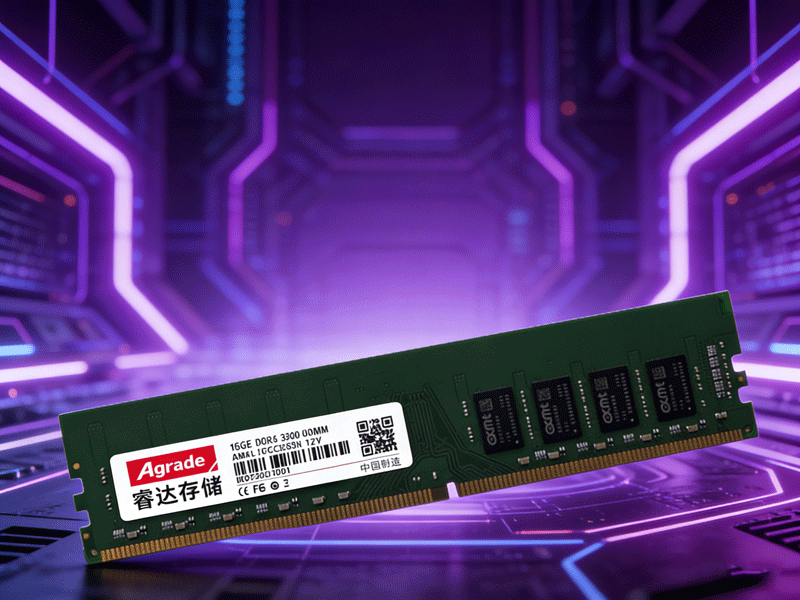
Temperature adaptability is the most critical distinction between the two. Standard DDR5 is designed for daily consumer scenarios such as desktops and laptops, with an operating temperature range limited to 0°C to 85°C. Beyond this range, it is prone to data errors, performance throttling, or even hardware damage. In contrast, Wide Temperature DDR5 achieves extended temperature support through chip-level optimization and specialized packaging. Industrial-grade models typically cover -40°C to 85°C, while automotive-grade variants reach -40°C to 125°C, verified through full-temperature dynamic testing to ensure bandwidth fluctuation of no more than 3% and a data error rate lower than 10⁻¹² under extreme temperatures.
Differences in hardware configuration and manufacturing processes are the foundation of stability. Wide Temperature DDR5 uses industrial-grade memory chips that undergo high and low-temperature cycle aging tests, whereas standard DDR5 adopts consumer-grade chips without such rigorous screening. In terms of packaging, Wide Temperature DDR5 employs high-temperature co-fired ceramic (HTCC) substrates or silicon nitride ceramic packaging, paired with high-temperature solder, to avoid damage caused by thermal expansion mismatch. Standard DDR5, on the other hand, uses conventional plastic packaging, which may experience reduced insulation performance at high temperatures.
Reliability and protective design also vary significantly to suit different usage environments. Wide Temperature DDR5 incorporates additional protective features such as full metal shielding cases and anti-sulfuration protection to resist electromagnetic interference (EMI) and vibration common in industrial settings. Some models also support SPD write protection to prevent accidental parameter modifications. In contrast, standard DDR5 prioritizes high-frequency performance and heat dissipation for consumer use, lacking the robust protection required for extreme environments. These differences in positioning define their application boundaries: standard DDR5 focuses on high-frequency performance for consumer use, while Wide Temperature DDR5 emphasizes stable operation in harsh conditions.

-
Products
Advantages
-
Solutions
-
News
About us
-
Contact us
Tel:+86 19926658803
Whatsapp:+86 19926658803
lianle1210@163.com
Address: 30CF, Caihong Building, Caihong Road, Futian District, Shenzhen City, Guangdong Province, China



Friendly Links:
