









News


 电商部
电商部  2026-01-16 16:50:44
 Interface Protocols for Industrial-grade Storage Cards: xSPI vs. SPI
Interface protocols are the bridge between industrial-grade storage cards and main control units, directly affecting transmission speed, compatibility, and stability. The mainstream protocols in industrial scenarios are SPI (Serial Peripheral Interface) and xSPI, each with unique advantages and suitable applications.
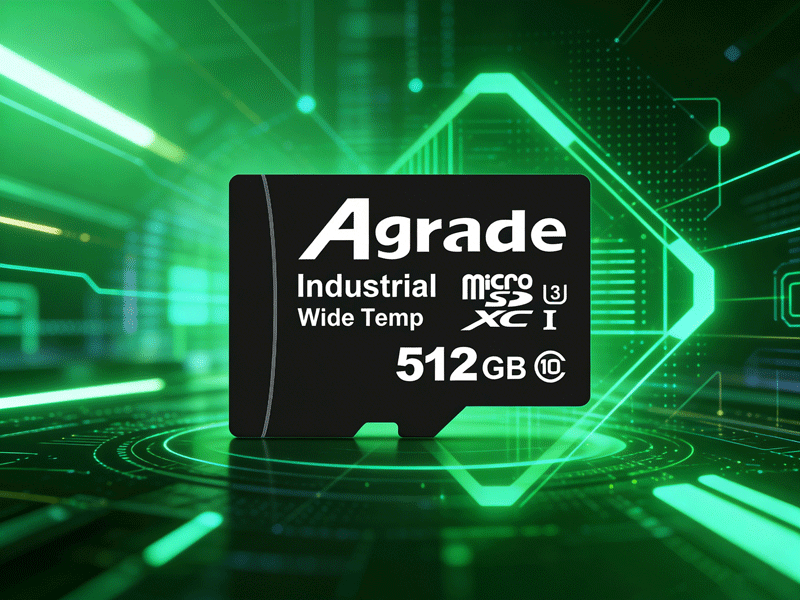
SPI is a mature traditional protocol that supports half-duplex or full-duplex communication with a single-line transmission mode. It has a transmission rate of approximately 50MHz, simple interface circuitry, and strong compatibility. SPI is ideal for simple industrial devices with low speed requirements, such as old PLCs, smart sensors, and traditional industrial control terminals. These devices do not demand high data transfer speeds, and SPI cards can reduce hardware design costs.
xSPI is an upgraded extension of the SPI protocol, backward compatible with traditional SPI while supporting 1-line, 2-line, 4-line, and 8-line transmission modes. This significantly increases bandwidth—industrial-grade storage cards using xSPI can reach a read speed of 200MHz in 4-line QPI (Quad Peripheral Interface) mode, and high-end models can exceed 300MHz, 4-6 times faster than traditional SPI. xSPI is suitable for high-speed scenarios such as fast firmware loading, real-time sensor data caching, and high-definition industrial image storage.
5G small base stations, industrial cameras, high-speed IoT gateways, and intelligent automotive terminals benefit from xSPI’s high speed without modifying existing circuit designs. Some industrial-grade cards support switching between SD and SPI modes, enhancing versatility. When selecting, confirm the main control platform’s interface support: choose SPI for old systems and xSPI for new high-speed devices, ensuring protocol version compatibility to avoid communication failures.

-
Products
Advantages
-
Solutions
-
News
About us
-
Contact us
Tel:+86 19926658803
Whatsapp:+86 19926658803
lianle1210@163.com
Address: 30CF, Caihong Building, Caihong Road, Futian District, Shenzhen City, Guangdong Province, China



Friendly Links:
