
























News


 电商部
电商部  2026-01-26 10:34:42
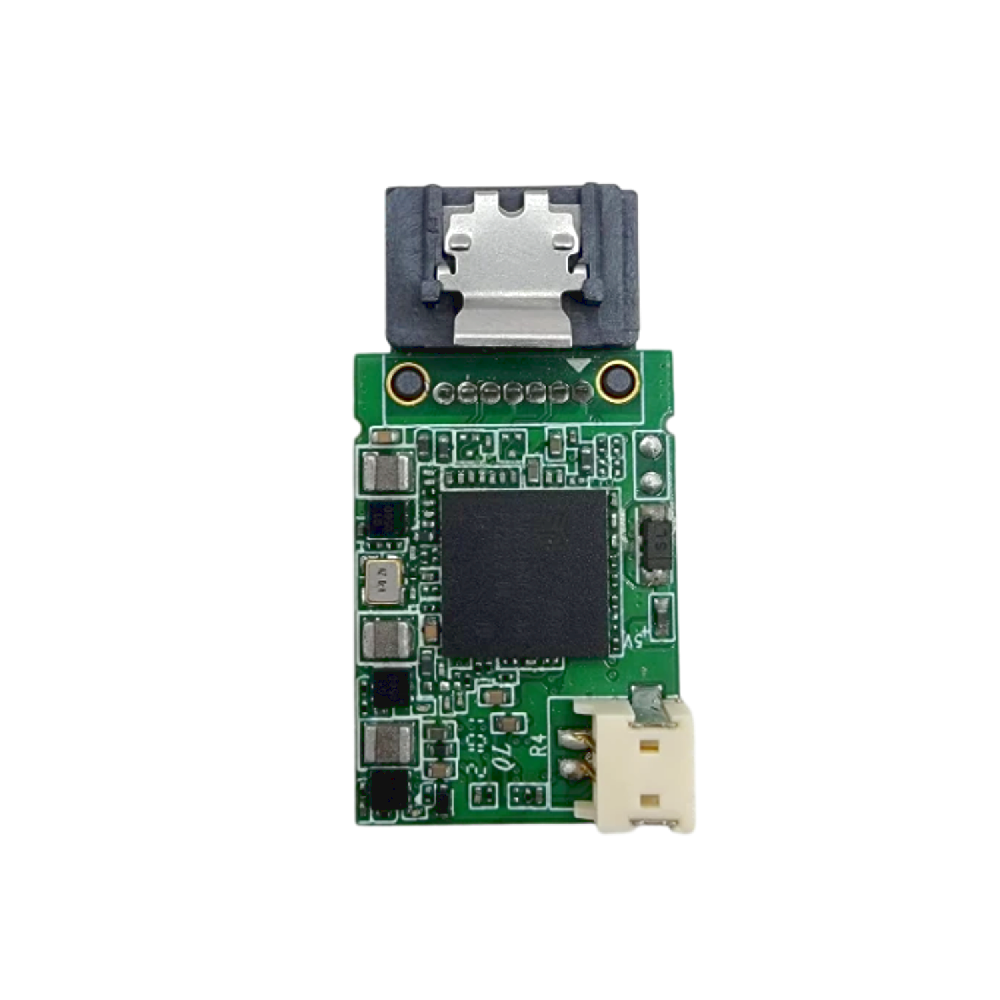
 A review of the application scenarios of wide-temperature solid-state drives: these fields cannot do
Wide temperature solid-state drives, with their excellent adaptability to extreme environments, long-term operational reliability, and data security guarantees, have become the core storage components in multiple key fields. Their application scenarios cover many areas such as industry, transportation, energy, aerospace, and military. Any scenario with large temperature fluctuations, high operational requirements, and complex working conditions cannot be met by ordinary consumer grade SSDs, and can only rely on wide temperature SSDs to ensure stable system operation. Its irreplaceability is particularly prominent in core infrastructure and special scenarios.

The industrial control field is one of the core application scenarios for wide temperature SSDs. Equipment such as automated production lines, industrial computers, PLC controllers, etc. are often in high temperature environments above 45 ℃. Some northern factories may have workshop temperatures as low as -20 ℃ in winter, and there are complex working conditions such as vibration and electromagnetic interference. Wide temperature SSDs can operate continuously for 7 × 24 hours in this temperature difference environment, ensuring stable storage and transmission of production data and control instructions, avoiding production line interruptions caused by storage device failures, and reducing economic losses. The demand for wide temperature SSDs in the field of rail transit is also extremely urgent. Subway tunnels experience high temperatures in summer and low temperatures in winter, and there is continuous vibration and electromagnetic interference during train operation. Wide temperature SSDs provide stable storage for signal control systems, onboard monitoring equipment, ticketing terminals, etc., directly related to train safety and operational efficiency, and are the core storage support of rail transit infrastructure.
The performance and reliability requirements for wide temperature SSDs are more stringent in the energy and aerospace fields. Petroleum exploration equipment needs to work in extreme environments such as deserts and plateaus, and withstand low temperatures below -40 ℃ and high temperatures above 60 ℃; The temperature in polar research stations, high-altitude observation stations, and other scenarios can be as low as -55 ℃, requiring ultra wide temperature SSDs to ensure stable storage of research data. Aerospace equipment and military equipment need to be adapted to an ultra wide temperature range of -55 ℃~125 ℃, while possessing characteristics such as anti vibration, anti impact, and anti electromagnetic interference. Wide temperature SSDs need to pass military regulations certification to meet the needs of satellite, shipborne airborne equipment, military control systems, and other scenarios. In addition, scenarios such as in vehicle terminals, outdoor monitoring equipment, and smart grid terminals also have rigid requirements for wide temperature SSDs due to large temperature fluctuations and complex operating environments, making them important application areas for wide temperature SSDs and providing core storage guarantees for the stable operation of critical infrastructure.
The industrial control field is one of the core application scenarios. Automated production lines and industrial computers are often exposed to high temperatures above 45 ℃ and low temperatures in winter. Wide temperature SSDs can ensure continuous operation of equipment and avoid production interruptions. In the field of rail transit, subway tunnels experience high temperatures in summer and low temperatures in winter. Wide temperature SSDs provide stable storage for signal systems and monitoring equipment to ensure safe driving.
The demand for wide temperature SSDs is more stringent in the energy and aerospace fields. Petroleum exploration equipment and polar research stations need to withstand low temperatures below -40 ℃, while aerospace equipment and military equipment need to be adapted to ultra wide temperature ranges of -55 ℃~85 ℃. In addition, in vehicle terminals, outdoor monitoring equipment, and onboard systems also rely on wide temperature SSDs to cope with complex temperature environments, becoming the storage cornerstone of critical infrastructure.

-
Products
Advantages
-
Solutions
-
News
About us
-
Contact us
Tel:+86 19926658803
Whatsapp:+86 19926658803
lianle1210@163.com
Address: 30CF, Caihong Building, Caihong Road, Futian District, Shenzhen City, Guangdong Province, China



Friendly Links:
