
















News


 电商部
电商部  2026-01-26 10:36:12
 Data security technology for wide-temperature solid-state drives: How to safeguard data in extreme e
Extreme temperature environments not only test the operational stability of wide temperature solid-state drives, but also pose far more stringent requirements for data security than in conventional scenarios. Alternating high and low temperatures can cause charge leakage and signal integrity degradation in flash memory cells, which can easily lead to data errors or loss; At the same time, unexpected power outages, electromagnetic interference, vibration and shock risks in extreme environments can also threaten data security. To address these challenges, wide temperature SSDs establish a triple technical system of hardware protection, algorithm error correction, and firmware optimization to build a full lifecycle data security guarantee, safeguarding data integrity and security throughout the entire process from data writing, storage, to reading.
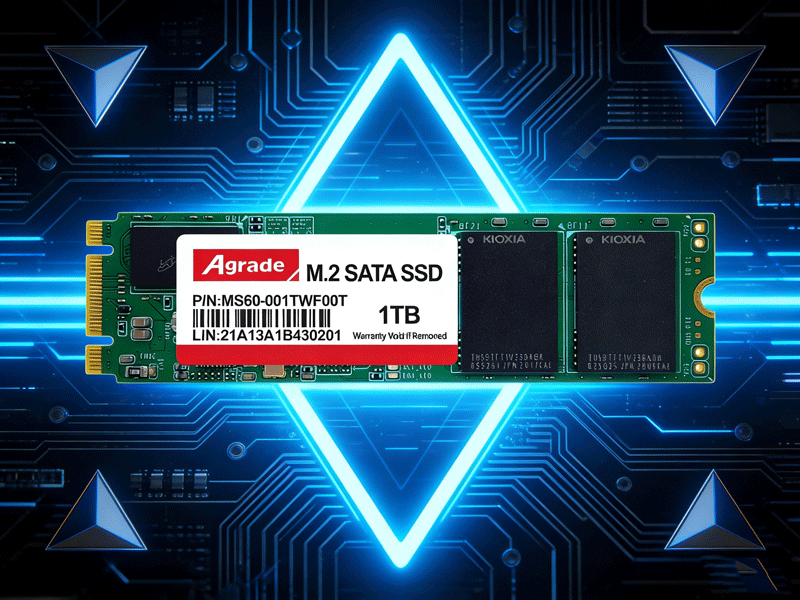
Hardware protection is the first line of defense for data security in wide temperature SSDs, and multiple protection designs have been strengthened for extreme environmental characteristics. Most industrial grade wide temperature SSDs are equipped with tantalum capacitor energy storage modules. Compared to ordinary capacitors, tantalum capacitors have higher resistance to high and low temperatures and energy storage density. After power failure, they can quickly release electrical energy within 5ms, providing sufficient power for caching data storage and completely avoiding data loss caused by unexpected power outages. Some high-end products also integrate national security chips that support AES-256 hardware encryption and firmware level encryption, encrypting stored data throughout the entire process to prevent sensitive data leakage or tampering, and are suitable for military, energy, government and other classified scenarios. At the same time, the hardware structure adopts a design that is resistant to vibration, electromagnetic interference, and impact. By strengthening PCB fixation, shielding cover protection, and other methods, it reduces data transmission abnormalities or chip damage caused by environmental interference, ensuring hardware stability under extreme working conditions.
Algorithm and firmware optimization form a deep data security guarantee, accurately responding to storage risks caused by high and low temperatures. Wide temperature SSDs commonly use 4K LDPC ECC advanced error correction technology. Compared to traditional BCH error correction algorithms, LDPC has stronger error correction capabilities and can significantly reduce the bit error rate in high and low temperature environments. Some high-end products' UBER (uncorrectable bit error rate) can be reduced to below 10 ^ -17, effectively repairing errors that occur during data transmission and storage. At the firmware level, dynamic voltage adjustment algorithms are used to optimize the read and write reference voltages in real-time based on changes in ambient temperature, avoiding signal integrity degradation caused by temperature differences and ensuring accurate data writing and reading. In addition, the firmware also integrates an intelligent data refresh mechanism, which shortens the data refresh cycle in high-temperature environments and suppresses data loss caused by charge leakage; Optimize reading timing in low-temperature environments to improve data reading accuracy. These technologies work together to form a comprehensive data security protection network, ensuring the integrity, security, and availability of data in extreme environments.
Hardware protection is the first line of defense. Most industrial grade wide temperature SSDs have built-in tantalum capacitor energy storage modules, which can provide power for data storage within 5ms after power failure, avoiding cache data loss; Some products integrate national security chips to achieve firmware level encryption and prevent sensitive data leakage. At the same time, hardware design enhances anti vibration and anti electromagnetic interference capabilities, reducing data anomalies caused by environmental interference.
Algorithms and firmware form a deep guarantee. By adopting 4K LDPC ECC advanced error correction technology, the bit error rate in high and low temperature environments is significantly reduced, and some products' UBER (uncorrectable bit error rate) can be reduced to 10 ^ -17; At the firmware level, dynamic voltage adjustment is implemented to optimize read and write reference voltages based on temperature changes, avoiding signal integrity degradation caused by temperature differences. These technologies work together to ensure the integrity and security of data in extreme environments.

-
Products
Advantages
-
Solutions
-
News
About us
-
Contact us
Tel:+86 19926658803
Whatsapp:+86 19926658803
lianle1210@163.com
Address: 30CF, Caihong Building, Caihong Road, Futian District, Shenzhen City, Guangdong Province, China



Friendly Links:
