





News


 电商部
电商部  2026-01-28 17:00:54
 Global Market Trends of Wide-temperature Memory Modules in 2026
Driven by the rapid development of emerging industries such as new energy vehicles, AI edge computing, and industrial Internet of Things, the global wide-temperature memory module market is showing a steady growth trend in 2026. With the continuous expansion of extreme environment application scenarios, market demand is shifting towards high performance, high reliability, and customization, and technological innovation and industrial chain upgrading are becoming core drivers of market development.
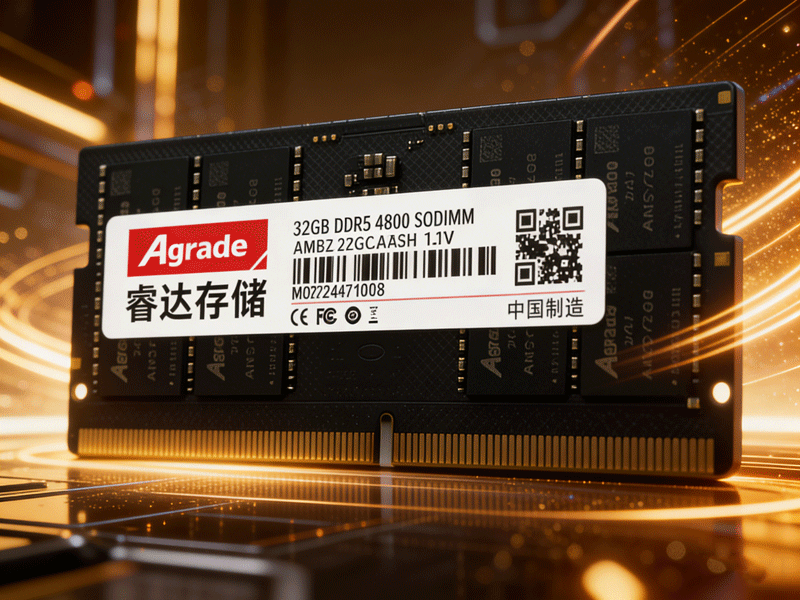
Market demand structure is continuously optimized, with automotive electronics and industrial automation as core growth drivers. The popularization of new energy vehicles and intelligent driving has significantly boosted demand for automotive-grade wide-temperature memory modules . Each intelligent vehicle requires multiple wide-temperature memory modules for ECU, ADAS, and in-vehicle entertainment systems, with automotive-grade products accounting for over 40% of the total market . The industrial automation sector maintains stable demand, with the upgrading of smart factories driving replacement of old equipment, and wide-temperature memory modules with ECC error correction and vibration resistance becoming standard configurations . Emerging scenarios such as AI edge computing, 5G base stations, and outdoor smart devices are growing rapidly, requiring high-bandwidth DDR5 wide-temperature memory to meet real-time data processing needs . The aerospace and military fields, though with small volume, drive R&D of ultra-wide temperature (-55°C to 125°C) and anti-radiation products .
Technological innovation focuses on DDR5 popularization and material upgrade. DDR5 wide-temperature memory is gradually replacing DDR4 in high-end scenarios, with manufacturers such as Innodisk launching CAMM2 form factor DDR5 modules, featuring speeds up to 6400MT/s and 60% smaller size, suitable for compact high-performance systems . Material technology innovations continue: silicon nitride ceramic substrates are widely used in high-power products, and graphene heat dissipation materials are popularized to improve thermal management efficiency . AI-driven intelligent thermal management systems are emerging, realizing dynamic adjustment of temperature and performance through machine learning algorithms to optimize energy efficiency . The integration of multiple protection technologies such as anti-sulfuration, anti-vibration, and electromagnetic shielding further enhances product reliability .
Market competition pattern presents a situation of coexistence between international giants and domestic brands. International manufacturers such as Samsung and Micron occupy the high-end market with advanced chip technology, focusing on automotive-grade and military-grade products . Domestic brands such as Apacer, ADATA, and Innodisk are rising rapidly, with advantages in cost-effectiveness and customization services, gradually replacing imports in industrial-grade scenarios . The localization of the industrial chain is accelerated, with core materials such as ceramic substrates and high-temperature solder realizing independent supply, improving supply chain stability . Price competition is intensifying, with domestic products priced 15%-30% lower than international counterparts, gaining more market share . Meanwhile, manufacturers are strengthening cooperation with downstream OEMs to provide integrated solutions and enhance customer stickiness .
Policy support and environmental requirements promote market standardization. Countries around the world have introduced policies to support the development of the industrial semiconductor industry, encouraging technological innovation of wide-temperature memory modules . Environmental regulations such as RoHS are stricter, promoting manufacturers to adopt lead-free solder and environmentally friendly materials . Certification systems such as JEDEC and AEC-Q100 are continuously improved, raising industry entry thresholds and promoting market concentration . Looking forward to 2026, the global wide-temperature memory module market is expected to maintain a double-digit growth rate, with technological iteration and scenario expansion driving the market towards high-quality development.

-
Products
Advantages
-
Solutions
-
News
About us
-
Contact us
Tel:+86 19926658803
Whatsapp:+86 19926658803
lianle1210@163.com
Address: 30CF, Caihong Building, Caihong Road, Futian District, Shenzhen City, Guangdong Province, China



Friendly Links:
