









News


 电商部
电商部  2026-02-06 18:35:37
 Technical Development Trends of Wide Temperature DDR4: The Future Upgrade Direction of Industrial Me
With the acceleration of industrial digitalization and intelligent upgrading, industrial equipment has higher and higher requirements for memory. It not only needs stronger temperature resistance and higher reliability but also needs better performance, lower power consumption, and wider scenario adaptability. As the mainstream product of current industrial-grade memory, the technology of Wide Temperature DDR4 is also constantly upgrading and iterating to meet the diversified needs of industrial scenarios. This article will discuss the technical development trends of Wide Temperature DDR4, look forward to the future upgrade direction of industrial memory, and help you understand the development potential of Wide Temperature DDR4.
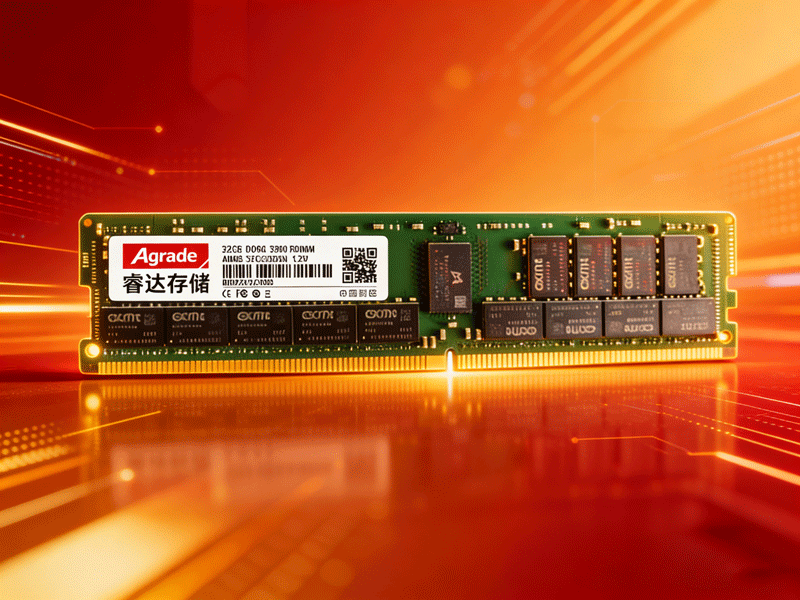
Trend 1: The wide temperature range will be further expanded to adapt to more extreme scenarios. At present, the operating temperature range of conventional Wide Temperature DDR4 is -40°C to 85°C, which can meet the needs of most industrial scenarios. In the future, with the upgrading of chip technology and packaging technology, the wide temperature range of Wide Temperature DDR4 will be further extended. High-end products can achieve ultra-wide temperature coverage of -55°C to 150°C, adapting to more extreme scenarios such as polar exploration, aerospace, high-temperature industrial furnaces, and deep-sea detection equipment.
At the same time, through the optimization of chip structure and material selection, the performance stability of Wide Temperature DDR4 in ultra-wide temperature range will be further improved, solving the pain point of memory operation of equipment in more extreme environments. For example, in aerospace scenarios, the memory needs to adapt to the extreme temperature environment of -55°C to 125°C in space. The upgraded Wide Temperature DDR4 can meet this requirement, providing reliable memory support for aerospace equipment.
Trend 2: Performance will continue to improve, balancing high speed and low power consumption. In the future, the frequency of Wide Temperature DDR4 will be upgraded to a higher level. The mainstream frequency is expected to break through 3200MHz and move towards 4266MHz. The data transmission rate will be greatly improved, which can better meet the needs of industrial equipment for massive data processing. At the same time, through the upgrading of process optimization and power management technology, while improving performance, the power consumption of Wide Temperature DDR4 will be further reduced, adapting to power-sensitive industrial equipment, such as outdoor portable industrial control equipment, new energy vehicle on-board electronic equipment, and field military equipment.
Reducing power consumption can not only save energy but also reduce heat generation, avoiding heat accumulation in extreme temperature environments and improving the stability and service life of the memory. In addition, the timing stability of Wide Temperature DDR4 will be further optimized, reducing performance degradation in extreme temperature environments and ensuring that it can maintain stable performance under long-term high-load operation.
Trend 3: Reliability and intelligence will be upgraded to reduce maintenance costs. In the future, Wide Temperature DDR4 will integrate more advanced temperature sensors and health monitoring modules, which can real-time monitor the operating temperature, working status, and aging degree of the memory, predict potential faults, and support predictive maintenance. This can help engineers find memory abnormalities in advance, replace faulty memory in time, avoid equipment failures and production interruptions, and reduce maintenance costs and economic losses.
At the same time, the characteristics of anti-sulfurization, shock resistance, and anti-electromagnetic interference of Wide Temperature DDR4 will be further strengthened. More advanced Underfill, conformal coating, and anti-sulfurization technologies will be adopted to extend the service life of the memory and improve its adaptability to harsh environments. In addition, modular configurable design will become the mainstream. Users can flexibly select combinations of capacity, frequency, and functions according to scenario requirements, such as selecting whether to enable ECC error correction function and adjusting memory frequency, to improve adaptability and reduce unnecessary cost waste.
Trend 4: Green manufacturing will become the development direction, adapting to the needs of industrial green development. With the global emphasis on environmental protection, industrial products are also moving towards green and low-carbon development. In the future, Wide Temperature DDR4 will adopt lead-free welding technology and recyclable materials in the production process, reducing environmental pollution and resource waste. At the same time, through the optimization of power management technology, further reduce power consumption, achieve energy conservation and emission reduction, and meet the green development requirements of industrial enterprises. This not only conforms to the global environmental protection trend but also can help enterprises reduce energy costs and improve market competitiveness.

-
Products
Advantages
-
Solutions
-
News
About us
-
Contact us
Tel:+86 19926658803
Whatsapp:+86 19926658803
lianle1210@163.com
Address: 30CF, Caihong Building, Caihong Road, Futian District, Shenzhen City, Guangdong Province, China



Friendly Links:
