










News


 电商部
电商部  2026-02-25 18:22:30
 Wide Temperature TF Card Operating Temperature Range: A Complete Guide to High and Low Temperature R
The operating temperature range is the most critical performance indicator of a Wide Temperature TF Card, as it directly determines its ability to function in extreme environments. Unlike standard TF Cards with limited temperature tolerance, Wide Temperature TF Cards are categorized into two main grades—regular wide temperature and ultra-wide temperature—each designed to meet specific environmental requirements. Understanding these temperature ranges, their technical foundations, and practical implications is essential for selecting the right card for your application and ensuring long-term reliability.
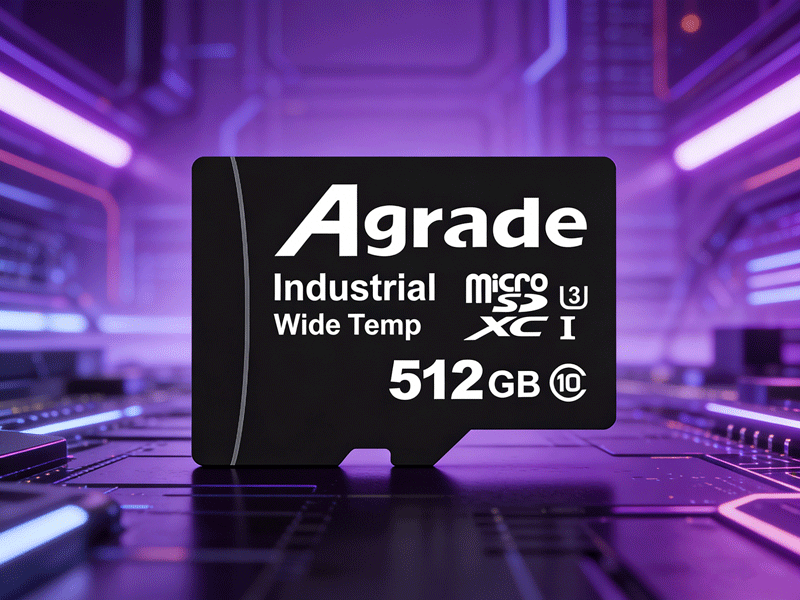
Regular industrial-grade Wide Temperature TF Cards typically have an operating temperature range of -25°C to 85°C (-13°F to 185°F). This range covers the majority of industrial and outdoor scenarios encountered in daily operations. For example, in northern regions, outdoor temperatures can drop to -20°C (-4°F) during winter, while automotive interiors can reach 70°C (158°F) or higher in summer. In these conditions, regular Wide Temperature TF Cards maintain stable read/write speeds and data integrity, making them suitable for applications such as outdoor surveillance cameras, automotive navigation systems, and industrial control devices operating in moderate extreme temperatures.
Ultra-wide temperature TF Cards are engineered for more extreme conditions, with an operating temperature range of -40°C to 95°C (-40°F to 203°F). These cards are specifically designed for use in harsh environments such as polar exploration, metallurgical workshops (where temperatures exceed 85°C), desert regions with extreme day-night temperature fluctuations, and cold storage facilities. The ability to operate at -40°C is particularly critical for equipment in polar or high-altitude areas, where standard electronic components would fail due to freezing.
To understand why Wide Temperature TF Cards can withstand such extreme temperatures, it is important to examine their internal design and materials. The key factor is the selection of industrial-grade flash memory chips. Unlike the consumer-grade TLC chips used in standard TF Cards, Wide Temperature TF Cards use SLC or MLC chips, which have a more robust structure. SLC chips, in particular, store only one bit of data per memory cell, reducing electron leakage and improving stability in extreme temperatures. MLC chips, which store two bits per cell, offer a balance between capacity and stability, making them suitable for regular wide temperature applications.
Another critical component is the packaging technology. Wide Temperature TF Cards use epoxy resin vacuum packaging, which replaces the standard plastic packaging used in consumer TF Cards. This vacuum-sealed packaging effectively isolates the internal chips from external temperature changes, moisture, and dust, while also strengthening the connection between the chips and the circuit board. This prevents solder joint detachment caused by sudden temperature changes, a common issue in standard TF Cards exposed to extreme conditions.
It is important to note the difference between operating temperature and storage temperature when selecting a Wide Temperature TF Card. Some manufacturers may advertise a wider storage temperature range (e.g., -55°C to 105°C), but the operating temperature range is the key parameter to consider. Storage temperature refers to the range in which the card can be stored without damage, while operating temperature refers to the range in which it can function normally. Using a card outside its operating temperature range will result in performance degradation or complete failure.
In practical applications, it is also important to consider temperature fluctuations. Even if the average temperature falls within the operating range, sudden temperature changes (e.g., moving a card from a -30°C cold storage facility to a 25°C room) can cause condensation inside the card, corroding the circuit board. To avoid this, it is recommended to allow the card to gradually adapt to temperature changes before use. By understanding the operating temperature range and technical features of Wide Temperature TF Cards, you can select the right product to ensure reliable performance in any extreme environment.

-
Products
Advantages
-
Solutions
-
News
About us
-
Contact us
Tel:+86 19926658803
Whatsapp:+86 19926658803
lianle1210@163.com
Address: 30CF, Caihong Building, Caihong Road, Futian District, Shenzhen City, Guangdong Province, China



Friendly Links:
