




News


 电商部
电商部  2026-02-25 18:23:16
 Core Technologies of Wide Temperature TF Cards: Principles of Industrial-Grade Protection
The ability of Wide Temperature TF Cards to operate reliably in harsh environments is not accidental—it is the result of a combination of advanced industrial-grade technologies, from chip selection to packaging, from read/write algorithms to hardware protection. Each technical component is carefully optimized to ensure stability, durability, and data integrity in extreme temperatures, vibrations, and electromagnetic interference. Understanding these core technologies is essential for appreciating the value of Wide Temperature TF Cards and making informed purchasing decisions.
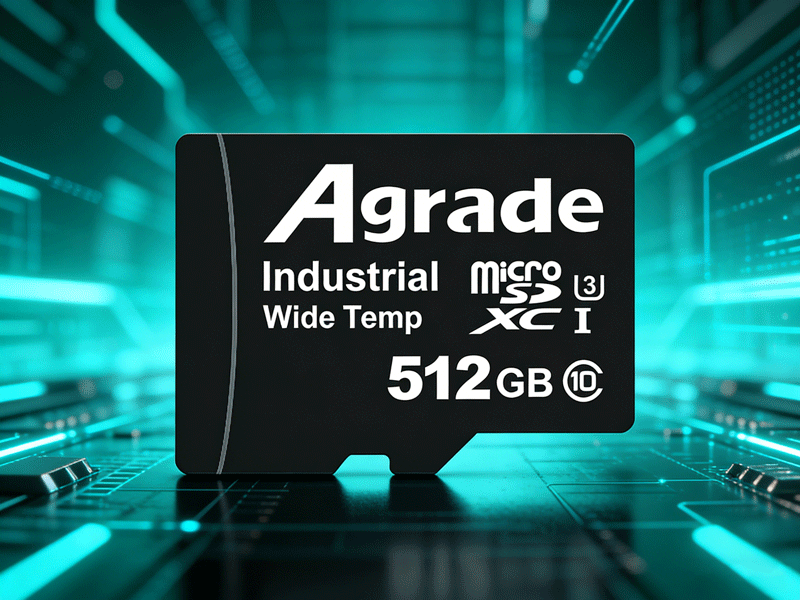
The foundation of a Wide Temperature TF Card’s performance lies in the selection of industrial-grade flash memory chips. Unlike standard TF Cards that use consumer-grade TLC (Triple-Level Cell) chips, Wide Temperature TF Cards exclusively use SLC (Single-Level Cell) or MLC (Multi-Level Cell) chips. SLC chips are the most reliable option, storing one bit of data per memory cell. This simple structure reduces electron leakage, even in extreme temperatures, making SLC chips highly resistant to wear and tear. They also offer faster read/write speeds (up to 100MB/s for sequential reads) and a longer lifespan (up to 100,000 program/erase cycles), making them ideal for high-demand industrial applications.
MLC chips, on the other hand, store two bits of data per cell, offering a balance between capacity and stability. While they are not as durable as SLC chips (with a lifespan of around 10,000 program/erase cycles), they are more cost-effective and suitable for applications that require larger storage capacities without the extreme durability demands of SLC. Both SLC and MLC chips undergo rigorous testing to ensure they can withstand the temperature ranges specified for Wide Temperature TF Cards.
Another critical technology is the high-temperature and low-temperature packaging process. Wide Temperature TF Cards use epoxy resin vacuum packaging, which is significantly more robust than the standard plastic packaging used in consumer TF Cards. This packaging process creates a hermetic seal that isolates the internal chips from external factors such as temperature changes, moisture, dust, and chemical contaminants. The epoxy resin also has excellent thermal conductivity, helping to dissipate heat in high-temperature environments and prevent freezing in low-temperature conditions. Additionally, the packaging strengthens the connection between the chips and the circuit board, reducing the risk of solder joint detachment due to vibration or temperature fluctuations.
To ensure reliable performance in industrial environments, Wide Temperature TF Cards also feature advanced anti-interference and shockproof technologies. The circuit boards are made of thick fiberglass, which provides superior mechanical strength and resistance to vibration. This is critical for applications such as automotive equipment, construction machinery, and outdoor monitoring devices, which are often subjected to constant vibrations. Additionally, the circuit boards are equipped with electromagnetic shielding layers, which protect the card from electromagnetic interference (EMI) generated by industrial equipment such as motors, transformers, and power supplies. EMI can cause data corruption or read/write errors, so effective shielding is essential for data integrity.
The final key technology is the industrial-grade controller chip and specialized algorithms. The controller chip acts as the "brain" of the TF card, managing read/write operations, data storage, and error correction. Wide Temperature TF Cards use high-performance industrial controllers that are designed to operate in extreme temperatures. These controllers are equipped with ECC (Error-Correcting Code) algorithms, which can detect and correct up to 512 bits of errors per 512-byte sector. This ensures that data remains accurate even in harsh environments where read/write errors are more likely.
Additionally, the controller uses wear leveling algorithms, which distribute read/write operations evenly across all memory cells. This prevents individual cells from being overused, extending the overall lifespan of the card. Some advanced models also feature power-off data protection, which automatically saves any pending data to stable memory blocks when the power is suddenly cut off, preventing data loss. Together, these technologies make Wide Temperature TF Cards the most reliable storage solution for extreme industrial and outdoor applications.

-
Products
Advantages
-
Solutions
-
News
About us
-
Contact us
Tel:+86 19926658803
Whatsapp:+86 19926658803
lianle1210@163.com
Address: 30CF, Caihong Building, Caihong Road, Futian District, Shenzhen City, Guangdong Province, China



Friendly Links:
