







































News


 电商部
电商部  2026-03-09 11:54:38
 Wide Temperature M.2 NVMe vs. Standard M.2 NVMe: Key Differences Explained
While Wide Temperature M.2 NVMe and standard M.2 NVMe share the same form factor and protocol, they are designed for vastly different use cases, and their differences extend far beyond just temperature tolerance. Understanding these differences is crucial for businesses and engineers looking to select the right storage solution for their specific application, as choosing the wrong drive can lead to performance issues, data loss, and premature failure. In this article, we’ll break down the core differences between Wide Temperature M.2 NVMe and standard M.2 NVMe, focusing on temperature range, component quality, reliability, and use cases.
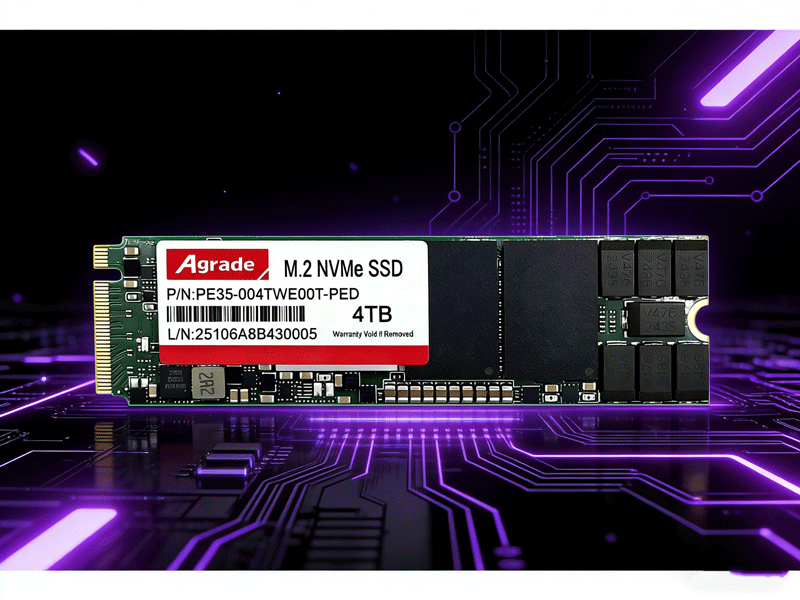
The most fundamental difference between the two is their operating temperature range. As mentioned earlier, standard M.2 NVMe SSDs are optimized for consumer and office environments, with an operating temperature range of 0°C to 70°C. If exposed to temperatures outside this range, standard drives may experience significant performance degradation, including reduced read/write speeds, lag, or even complete failure. For example, a standard M.2 NVMe drive used in a car’s infotainment system could fail during summer heatwaves, where cabin temperatures can exceed 70°C, or in winter cold snaps, where temperatures drop below 0°C.
Wide Temperature M.2 NVMe drives, on the other hand, are specifically engineered to withstand extreme temperatures. With a typical operating range of -40°C to 85°C, they can handle the harsh conditions of industrial facilities, automotive applications, and outdoor environments. This temperature tolerance is achieved through the use of industrial-grade components, including high-quality NAND flash memory and a ruggedized controller. Unlike consumer-grade NAND flash, which is selected for cost-effectiveness, industrial-grade NAND undergoes rigorous high and low-temperature testing to ensure stability. The controller is also optimized with temperature compensation circuits that adjust its operating parameters in response to thermal changes, preventing overheating or freezing.
Another key difference is component quality and build standards. Standard M.2 NVMe drives use consumer-grade components that balance performance and cost, making them suitable for everyday use but not for harsh environments. Wide Temperature M.2 NVMe drives, however, use industrial-grade components that are more durable and reliable. They feature thicker PCB (Printed Circuit Board) materials that resist thermal expansion and contraction, as well as advanced soldering techniques that prevent component detachment in extreme temperatures. Additionally, these drives often include extra protection features such as electromagnetic interference (EMI) shielding and dust/water resistance, which are critical for industrial and outdoor applications.
Reliability and lifespan are also significant differentiators. Wide Temperature M.2 NVMe drives have a much higher MTBF (Mean Time Between Failures) than standard drives, typically exceeding 1 million hours, compared to 500,000 to 700,000 hours for consumer-grade drives. They also have a higher TBW (Total Bytes Written) rating, which measures the total amount of data that can be written to the drive before it fails. For example, a 1TB Wide Temperature M.2 NVMe drive may have a TBW of 600TB or more, while a standard 1TB M.2 NVMe drive may have a TBW of 300TB to 400TB. This makes Wide Temperature M.2 NVMe drives ideal for applications that require 24/7 operation and high data throughput, such as outdoor surveillance and industrial automation.

-
Products
Advantages
-
Solutions
-
News
About us
-
Contact us
Tel:+86 19926658803
Whatsapp:+86 19926658803
lianle1210@163.com
Address: 30CF, Caihong Building, Caihong Road, Futian District, Shenzhen City, Guangdong Province, China



Friendly Links:
