









News


 电商部
电商部  2025-12-08 12:48:53
 High-Reliability Industrial Grade RAM: Testing Standards & Certification Requirements
In mission-critical industrial environments—where RAM failures can trigger production shutdowns, compromise safety, or incur massive financial losses—high-reliability industrial grade RAM is defined not just by its hardware design, but by its adherence to rigorous testing standards and certification requirements. Unlike consumer RAM, which undergoes minimal quality checks focused on cost and basic performance, industrial grade RAM must pass a battery of specialized tests to prove its resilience in harsh conditions, long-term stability, and compliance with industry-specific mandates. These standards and certifications are the backbone of trust for engineers, system integrators, and end-users, ensuring that the RAM can withstand the unforgiving demands of industrial automation, aerospace, automotive, and energy sectors. Below is a comprehensive overview of the key testing standards, certification frameworks, and their critical role in delivering high-reliability industrial RAM.
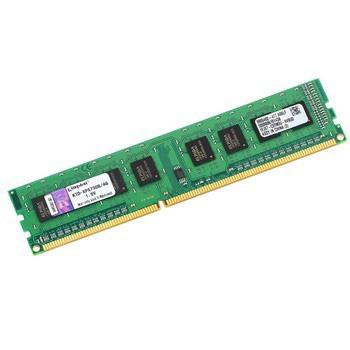
At the foundation of industrial grade RAM’s reliability are international environmental testing standards, which validate its ability to endure extreme conditions. The most widely recognized framework is the IEC 60068 series (International Electrotechnical Commission), which specifies test methods for equipment under environmental stress. For industrial RAM, two key tests from this series are mandatory: temperature cycling (IEC 60068-2-14) and temperature shock (IEC 60068-2-13). Temperature cycling exposes the RAM to repeated shifts between -40°C and 85°C (or wider ranges for specialized models) over hundreds of cycles, simulating seasonal changes or operational heat spikes in industrial settings. Temperature shock, by contrast, subjects the module to rapid temperature transitions (e.g., from -40°C to 85°C in 5 minutes) to test the integrity of solder joints, PCBs, and component bonds—failures that are common in consumer RAM under thermal stress. Additionally, vibration testing (IEC 60068-2-6) and shock testing (IEC 60068-2-27) validate resistance to mechanical stress, such as the vibration of industrial machinery or the shock of transportation in rugged vehicles. Consumer RAM rarely undergoes these tests, explaining its fragility in non-controlled environments.
Another critical set of standards focuses on long-term reliability and endurance. Industrial RAM is expected to operate 24/7 for 10–20 years, so tests like extended burn-in testing are non-negotiable. During burn-in, the RAM is run at maximum load, elevated temperatures (typically 85°C), and high voltage for 100–1,000 hours to identify early-stage failures or component weaknesses. This process weeds out "infant mortality" issues that could cause premature failure in the field— a step skipped in consumer RAM production to cut costs. For flash-based industrial RAM (e.g., SSDs used as industrial RAM alternatives), the JEDEC JESD218 standard defines endurance testing, requiring modules to sustain millions of program/erase (P/E) cycles without performance degradation. This is critical for applications like real-time data logging in IIoT devices, where frequent write operations would quickly wear out consumer-grade flash memory.
Error correction and data integrity are also governed by strict standards. The JEDEC JESD79 standard (for DDR SDRAM) outlines requirements for Error Correction Code (ECC) implementation in industrial RAM. ECC tests validate the module’s ability to detect and correct single-bit errors and flag multi-bit errors, as specified in IEC 61508 (Functional Safety for Electrical/Electronic/Programmable Electronic Safety-Related Systems). For safety-critical applications—such as medical devices or nuclear power plant controllers—IEC 61508 certification is mandatory, with industrial RAM required to meet Safety Integrity Levels (SIL) 2 or higher. This ensures that memory errors do not propagate into system failures that risk human life. Consumer RAM, lacking ECC or SIL compliance, is inherently disqualified from these high-stakes use cases.
Industry-specific certifications further tailor industrial RAM to niche applications. In the automotive sector, RAM must comply with the AEC-Q100 standard (Automotive Electronics Council), which includes temperature testing (-40°C to 125°C for underhood components), humidity testing, and solderability checks to ensure compatibility with automotive manufacturing processes. For aerospace and defense, the MIL-STD-810 standard (U.S. Military Standard) specifies environmental engineering considerations, including altitude testing, radiation resistance (for high-altitude or space applications), and electromagnetic compatibility (EMC) to avoid interference with sensitive avionics. The DO-178C standard, meanwhile, governs software and hardware for airborne systems, requiring industrial RAM to meet strict traceability and reliability criteria to prevent in-flight failures. In the energy sector, IEC 61850 (for power utility automation) mandates that industrial RAM support time-sensitive data transfer and withstand voltage fluctuations, ensuring stable operation in smart grids and renewable energy systems.
EMC (Electromagnetic Compatibility) certification is another non-negotiable requirement for industrial RAM. Standards like CISPR 22 (International Special Committee on Radio Interference) and FCC Part 15 limit electromagnetic emissions from the RAM module, preventing interference with other industrial equipment such as sensors, controllers, and communication devices. Conversely, immunity testing (per IEC 61000) ensures that the RAM can operate normally in the presence of external electromagnetic fields—common in factories with heavy machinery or power tools. Consumer RAM often fails EMC tests due to cost-cutting in component shielding, making it a liability in industrial environments where electromagnetic noise is prevalent.
Certification bodies play a pivotal role in validating compliance. Leading organizations like UL (Underwriters Laboratories), TÜV 莱茵 (TÜV Rheinland), and Intertek conduct independent testing to verify that industrial RAM meets global standards. These certifications are not one-time achievements: manufacturers must undergo regular audits and re-testing to maintain compliance, ensuring that production processes remain consistent and that new component batches meet the same high standards. For end-users, third-party certification provides objective proof of reliability, reducing the risk of selecting subpar RAM that could compromise system performance.
In conclusion, high-reliability industrial grade RAM is defined by its adherence to stringent testing standards and certification requirements that address environmental resilience, long-term endurance, data integrity, and industry-specific needs. From IEC 60068’s environmental tests to AEC-Q100’s automotive mandates and IEC 61508’s functional safety criteria, these standards ensure that industrial RAM can perform flawlessly in the harshest and most critical applications. Certifications from reputable bodies further validate this reliability, giving engineers and organizations the confidence to deploy RAM in systems where failure is not an option. As industrial systems become more connected and mission-critical, the importance of these standards will only grow—solidifying their role as the foundation of high-reliability industrial computing.

-
Products
Advantages
-
Solutions
-
News
About us
-
Contact us
Tel:+86 19926658803
Whatsapp:+86 19926658803
lianle1210@163.com
Address: 30CF, Caihong Building, Caihong Road, Futian District, Shenzhen City, Guangdong Province, China



Friendly Links:
