




News


 电商部
电商部  2025-12-08 12:41:34
 How to Choose Industrial DDR RAM for Embedded Systems: A Complete Guide
Embedded systems in industrial settings—from IoT edge devices and industrial controllers to medical equipment and automotive infotainment—demand memory solutions that balance performance, durability, and compatibility. Industrial DDR (Double Data Rate) RAM, optimized for rugged environments and long-term operation, is the backbone of these systems. However, selecting the right module requires navigating technical specifications, environmental constraints, and system requirements. This guide outlines a step-by-step framework to choose industrial DDR RAM (DDR4, DDR5, or specialized variants) that ensures optimal performance and reliability for embedded industrial applications.
1. Align DDR Generation with Embedded System Requirements
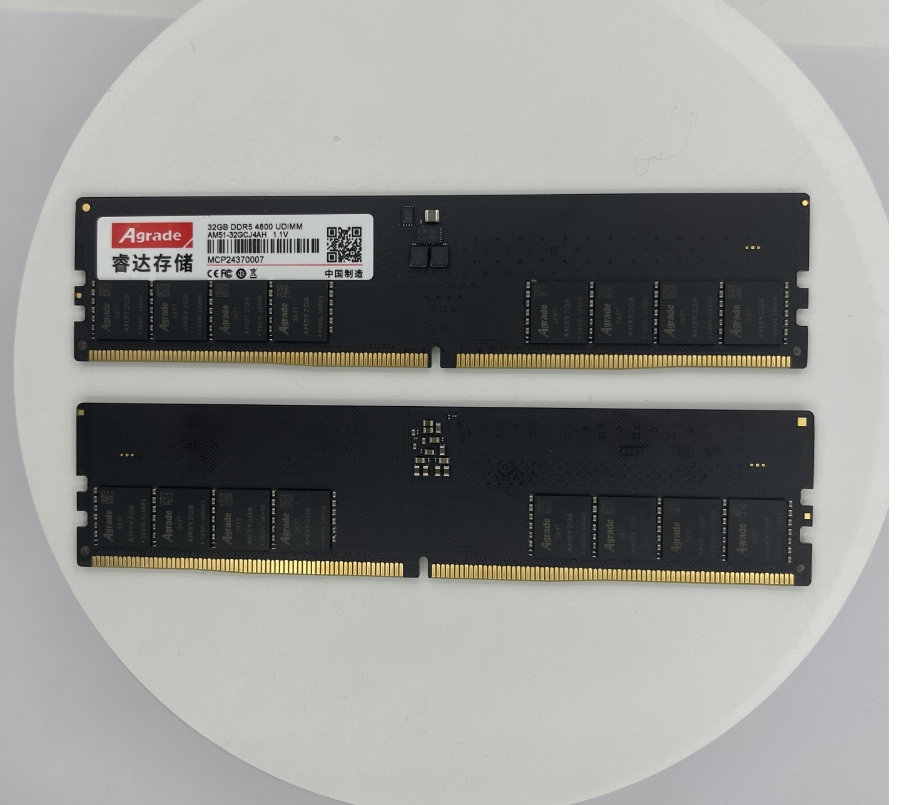
The first critical step is selecting the appropriate DDR generation, as it directly impacts compatibility and performance. Industrial DDR4 remains the most widely adopted due to its balance of cost, power efficiency, and maturity, with data transfer rates ranging from 2133MT/s to 3200MT/s—ideal for mid-range embedded systems like PLCs (Programmable Logic Controllers) and sensor hubs. For high-performance applications such as AI-enabled robotics or real-time data processing, industrial DDR5 offers faster speeds (4800MT/s to 6400MT/s) and higher bandwidth, though it may come with a premium cost. For resource-constrained embedded systems (e.g., low-power IoT sensors), industrial LPDDR4/5 (Low-Power DDR) is preferred, as it reduces power consumption by up to 40% compared to standard DDR modules. Always verify compatibility with the embedded motherboard’s chipset and CPU, as older systems may not support newer DDR generations.
2. Prioritize Ruggedization for Industrial Environments
Embedded industrial systems often operate in harsh conditions, so ruggedization features are non-negotiable. Focus on three key specifications: temperature range, shock/vibration resistance, and environmental sealing. Industrial DDR RAM should support an extended temperature range of -40°C to 85°C (or -40°C to 105°C for extreme applications) to withstand outdoor deployments or enclosed machinery with heat buildup. For systems in high-vibration settings (e.g., factory automation robots or vehicle-mounted devices), select modules with reinforced PCBs, soldered components (instead of socketed), and compliance with MIL-STD-810G standards—typically offering vibration resistance up to 10G (10Hz–2000Hz) and shock resistance up to 100G (1ms duration). Additionally, IP-rated (Ingress Protection) modules (e.g., IP67) protect against dust and moisture, critical for applications in food processing plants or outdoor energy infrastructure.
3. Ensure Data Integrity with ECC and Error Handling
Embedded systems handling mission-critical data (e.g., medical devices, power grid controllers) require uncompromised data integrity. Opt for industrial DDR RAM with Error Correction Code (ECC) support, which detects and corrects single-bit errors and flags multi-bit errors—preventing system crashes or data corruption. For applications where even minimal downtime is unacceptable, consider advanced error-handling features like ChipKill ECC (common in DDR5) or scrubbing algorithms that proactively identify and repair 潜在 errors. Avoid non-ECC industrial RAM unless the system is non-critical (e.g., basic monitoring displays), as consumer-grade error correction is insufficient for industrial use.
4. Match Capacity and Bandwidth to Workload Demands
Overprovisioning RAM increases costs, while underprovisioning leads to performance bottlenecks. Calculate required capacity based on the embedded system’s workload: for light tasks (e.g., simple sensor data logging), 2GB–8GB of industrial DDR4 is sufficient. For moderate workloads (e.g., SCADA systems running RTOS), 8GB–16GB is optimal. High-performance applications (e.g., AI inference on edge devices) may require 16GB–64GB of industrial DDR5. Bandwidth is equally critical—ensure the RAM’s data transfer rate aligns with the system’s data throughput needs. For example, a video analytics embedded system processing 4K streams requires DDR RAM with at least 25GB/s bandwidth to avoid frame drops. Consult the CPU and software documentation to determine minimum and recommended bandwidth specifications.
5. Validate Long-Term Reliability and Compliance
Embedded industrial systems often operate 24/7 for 5–10 years, so reliability is paramount. Evaluate the RAM’s Mean Time Between Failures (MTBF) rating—aim for modules with MTBF exceeding 1 million hours (equivalent to ~114 years of continuous operation). Additionally, verify compliance with industry-specific standards: ATEX certification for explosive environments (e.g., oil refineries), ISO 13485 for medical devices, or automotive-grade standards (AEC-Q100) for in-vehicle embedded systems. Choose reputable manufacturers that conduct rigorous testing (temperature cycling, humidity testing, endurance stress) and offer long-term supply guarantees, as obsolete RAM can disrupt maintenance and upgrades.
6. Consider Power Efficiency for Battery-Powered Embedded Systems
For battery-operated embedded systems (e.g., portable industrial monitors, remote sensors), power consumption is a key consideration. Industrial LPDDR4/5 modules are designed for low power, with operating voltages as low as 1.1V (DDR4) or 1.05V (DDR5), extending battery life by reducing energy draw during idle and active states. Some modules also feature dynamic voltage scaling (DVS) to adjust power based on workload, further optimizing efficiency. Avoid standard DDR4/5 in battery-powered systems, as their higher voltage requirements (1.2V–1.35V) will drain batteries rapidly.
Conclusion
Choosing the right industrial DDR RAM for embedded systems requires a holistic approach that balances compatibility, ruggedness, performance, and reliability. By aligning the DDR generation with system capabilities, prioritizing environmental ruggedization, ensuring data integrity with ECC, matching capacity/bandwidth to workloads, validating compliance, and optimizing power efficiency, engineers can select a module that delivers consistent performance in harsh industrial environments. As embedded systems evolve with Industry 4.0—integrating AI, IoT, and real-time processing—the demand for specialized industrial DDR RAM (e.g., high-bandwidth DDR5, ultra-low-power LPDDR5) will grow. Investing time in careful selection ensures embedded systems operate reliably for their entire lifecycle, minimizing downtime and maximizing return on investment.

-
Products
Advantages
-
Solutions
-
News
About us
-
Contact us
Tel:+86 19926658803
Whatsapp:+86 19926658803
lianle1210@163.com
Address: 30CF, Caihong Building, Caihong Road, Futian District, Shenzhen City, Guangdong Province, China



Friendly Links:
