




News


 电商部
电商部  2025-12-08 12:56:19
 Future Trends of Industrial Grade RAM: DDR5 Advancements & Industry Adoption
The industrial sector is undergoing a profound transformation driven by Industry 4.0, AI integration, and edge computing expansion. As industrial systems demand higher bandwidth, lower power consumption, and uncompromised reliability, DDR5 has emerged as the cornerstone of next-generation industrial grade RAM. Moving beyond the limitations of DDR4, industrial DDR5 is evolving with groundbreaking technical advancements while accelerating adoption across critical sectors. This article explores the key innovations shaping DDR5’s industrial future and the market dynamics fueling its widespread deployment.
Technical Advancements Redefining Industrial DDR5 Capabilities
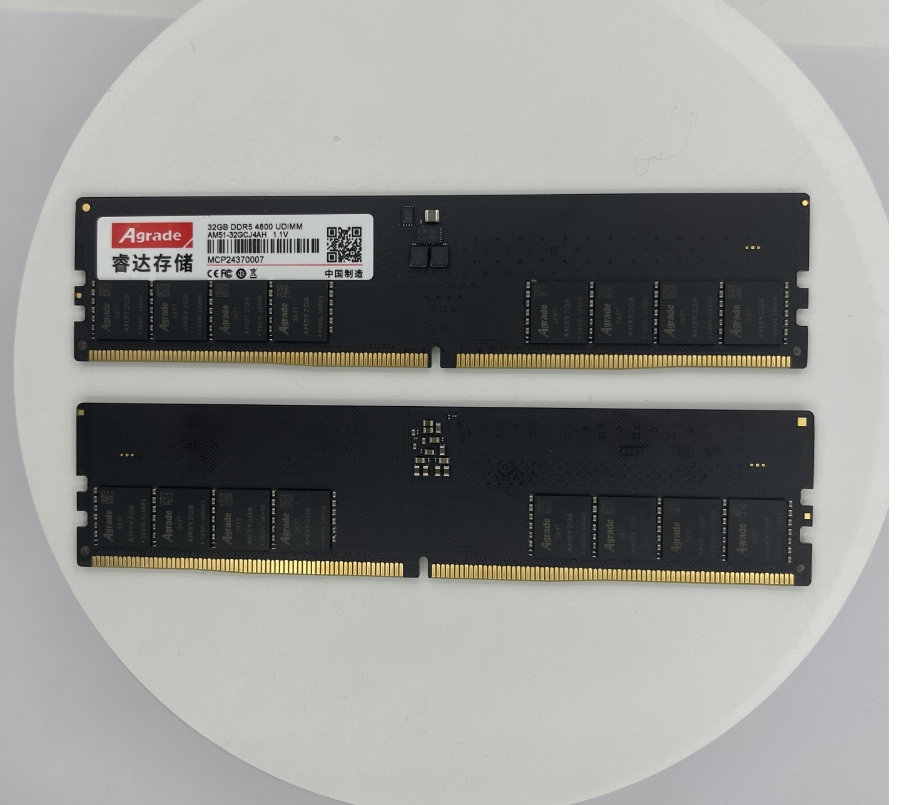
Industrial DDR5 is not just an incremental upgrade but a foundational reimagining of memory architecture, tailored to industrial rigor. A core breakthrough is the exponential bandwidth expansion: starting at 4800MT/s—50% faster than DDR4’s maximum 3200MT/s—leading industrial variants now reach 6400MT/s (as seen in ADATA’s industrial CU-DIMM/CSO-DIMM lineup) with next-generation clock drivers pushing speeds to 9200MT/s . This leap is enabled by DDR5’s 16-bit burst length (doubling DDR4’s 8-bit) and 32-Bank architecture, delivering 1.87x the effective bandwidth of DDR4 to support data-intensive workloads like AI inference and real-time video analytics .
Power efficiency is another transformative advancement. Operating at 1.1V (down from DDR4’s 1.2V), industrial DDR5 reduces per-bandwidth power consumption by 20%—a critical gain for battery-powered edge devices and energy-constrained industrial systems . Advanced power management features, including on-module PMIC (Power Management Integrated Circuit) and dynamic channel disabling, further optimize energy use by regulating voltage distribution and shutting down idle components . For industrial IoT edge nodes, this translates to extended operational lifespans and reduced carbon footprints.
Reliability enhancements tailored to harsh industrial environments are equally pivotal. Industrial DDR5 integrates on-die ECC (Error Correction Code) to mitigate bit errors from thermal stress or electromagnetic interference, complemented by system-level ECC for mission-critical applications . Physical ruggedization features—such as 30µ gold fingers, anti-sulfur coatings, and reinforced PCBs—prevent corrosion and mechanical failure in environments with extreme temperatures (-40°C to 95°C) and chemical exposure . Built-in TVS (Transient Voltage Suppressors) also shield modules from voltage spikes, a common hazard in industrial power grids .
Industry Adoption Drivers and Sector-Specific Deployment
DDR5’s industrial adoption is accelerating, driven by converging factors: performance demand, price parity with DDR4, and processor ecosystem support. According to TrendForce, DDR5’s share of the industrial DRAM market will surge to 65% in 2025, up from 45% in 2024 . This growth is fueled by the "price 倒挂" (price inversion) phenomenon—DDR4 prices have spiked 30%+ in 2025 due to constrained supply, making DDR5 the cost-effective choice for new deployments .
Key sectors leading adoption include:
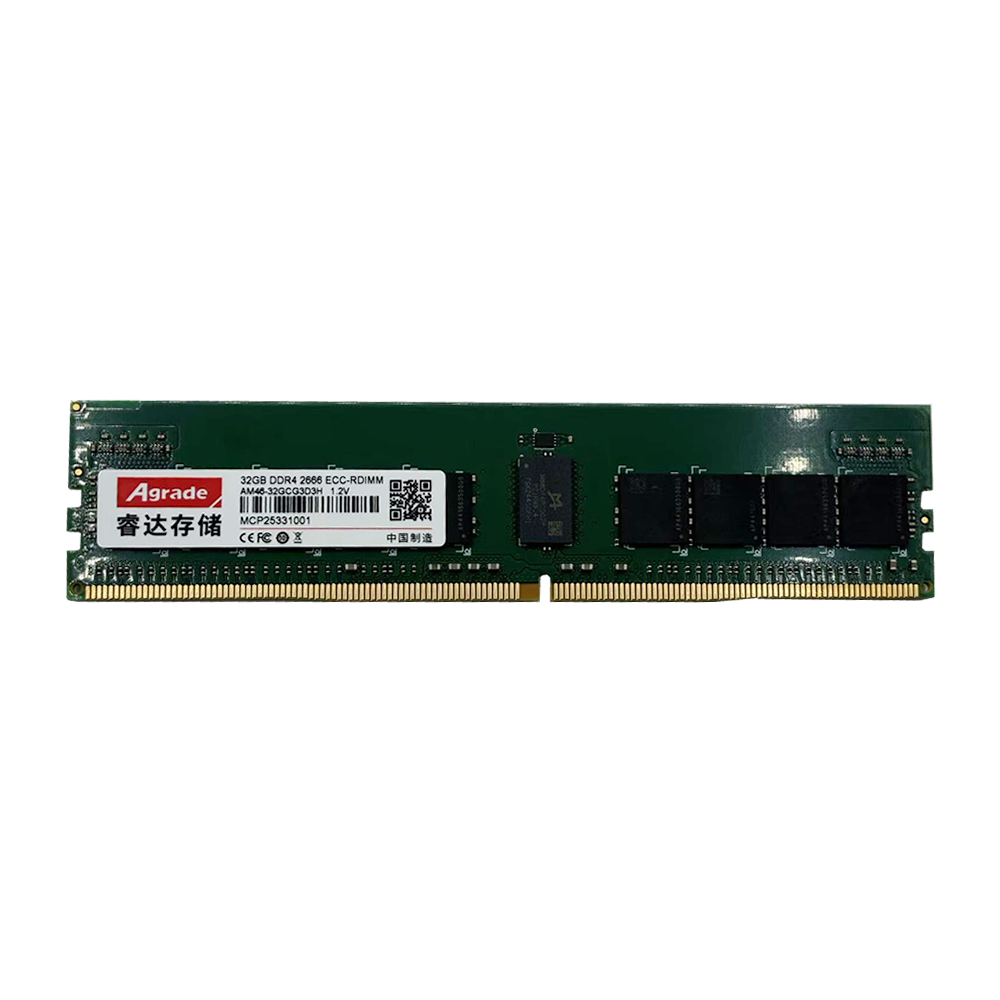
• AI and High-Performance Computing (HPC): Industrial DDR5’s bandwidth and capacity (up to 32GB per module) power AI servers for factory automation and predictive maintenance, where single systems require 2-3x more memory than traditional setups .
• Smart Manufacturing: Vision control systems and robotic arms leverage DDR5’s low latency (enabled by dual 32-bit subchannels) to process high-resolution imagery in real time, boosting production line efficiency .
• Transportation and Aerospace: Automotive ADAS systems and avionics benefit from DDR5’s wide temperature tolerance and shock resistance, with modules meeting AEC-Q100 and MIL-STD-810G standards .
• Healthcare: Medical imaging devices rely on DDR5’s error correction and high bandwidth to handle 3D scans and diagnostic data without latency, critical for life-saving applications .
Processor vendor alignment is a key catalyst: Intel’s Arrow Lake and Emerald Rapids platforms, along with AMD and domestic chips like Hygon’s latest processors, now mandate DDR5 support, forcing industrial system upgrades . JEDEC’s ratification of the DDR5-6400 standard has further standardized deployment, ensuring cross-compatibility across hardware ecosystems .
Future Trajectory: Next-Gen Innovations and Market Expansion
The evolution of industrial DDR5 will focus on three critical directions. First, speed and capacity scaling: next-generation modules will reach 8800-9200MT/s (via advanced CKD chips from Montage Technology) and 64GB+ capacities, catering to emerging AI training workloads at the edge . Second, customization for extreme environments: manufacturers will expand ruggedized options, including enhanced anti-vibration designs and extended temperature ranges (-55°C to 105°C) for oil & gas and mining applications . Third, integration with emerging technologies: DDR5 will pair with CXL (Compute Express Link) and Chiplet architectures to create disaggregated memory systems, enabling dynamic resource allocation in industrial clouds .
Long-term, DDR5 will become the universal standard for industrial RAM, with DDR4 phased out by 2027 for new deployments. Its combination of performance, efficiency, and reliability aligns with the needs of smart factories, connected cities, and autonomous systems—solidifying its role as the memory backbone of the industrial future.
Conclusion
Industrial grade DDR5 is no longer a nascent technology but a mature, scalable solution driving industrial digital transformation. Its technical advancements—from 6400MT/s bandwidth to 20% lower power consumption—address the most pressing challenges of modern industrial systems. As adoption accelerates across manufacturing, healthcare, transportation, and HPC, DDR5 is poised to redefine operational efficiency and reliability. For industrial engineers and system integrators, embracing DDR5 is not just a technical upgrade but a strategic investment in future-ready infrastructure, ensuring compatibility with next-generation processors and emerging workloads like edge AI and real-time analytics. The era of DDR5-powered industrial systems is here, and its impact will only deepen as technology evolves to meet the demands of an increasingly connected and automated world.

-
Products
Advantages
-
Solutions
-
News
About us
-
Contact us
Tel:+86 19926658803
Whatsapp:+86 19926658803
lianle1210@163.com
Address: 30CF, Caihong Building, Caihong Road, Futian District, Shenzhen City, Guangdong Province, China



Friendly Links:
